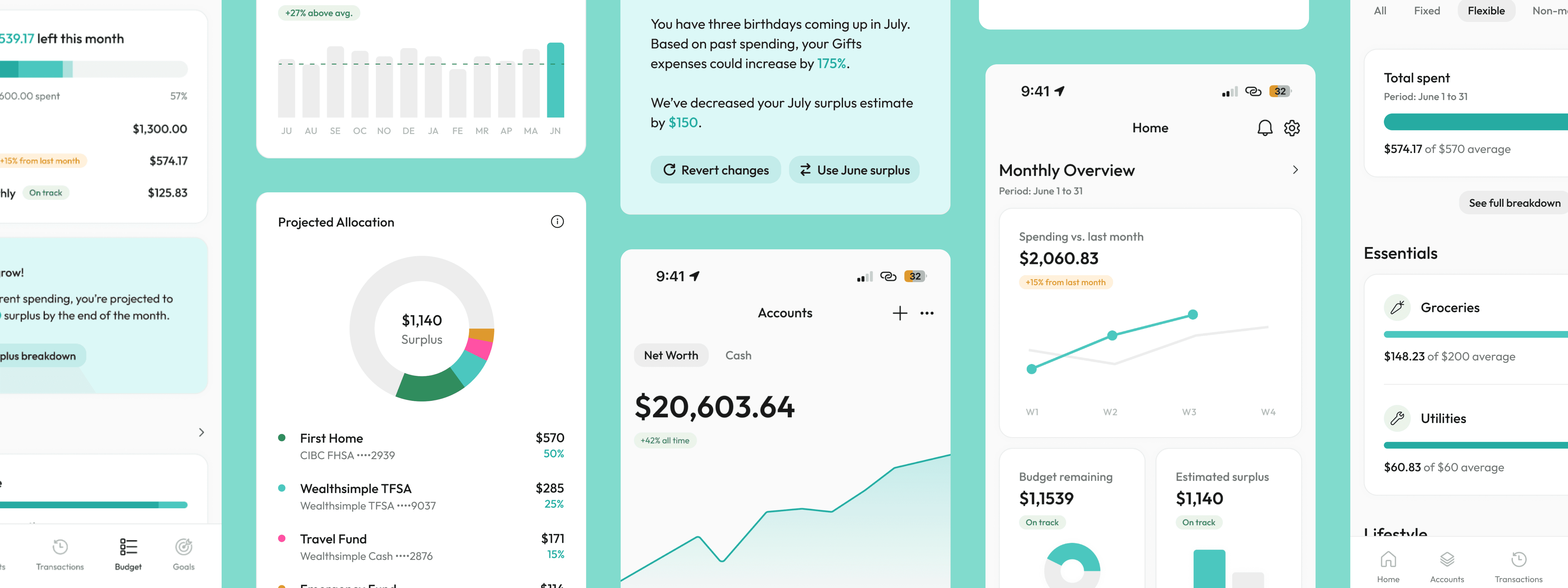
Surplus
Automated budgeting tool that analyzes spending habits and directs surplus money to savings and investment goals.
Timeline
2 months
Team
Solo
Skills
Product Design, User Research
project overview
Rather than relying on manual categorization and constraining budgets, Surplus automates zero-based budgeting and allocates leftover money to user-designated goals based on priorities and timelines.
By analyzing spending habits through linked accounts and cards, it lets users know where they stand based on average spending across fixed, flexible, and non-monthly categories which impacts their projected surplus income at month-end.
Automated budgeting
Securely link your bank accounts and cards to automatically track your spending habits.
Comprehensive overview
See your net worth and transactions in real time across all accounts.
Flexible budgeting
Your spending habits are analyzed to calculate monthly averages and projected surpluses.
Direct surplus to goals
Create financial goals and Surplus can help you allocate leftover money every month to achieve them.
background
Although most young adult Canadians are investing their money, they are still more likely to hold savings in cash compared to Gen Xs and Boomers who are more likely to put their savings into investments. I wanted to know:
What's preventing young adults from investing more?
research
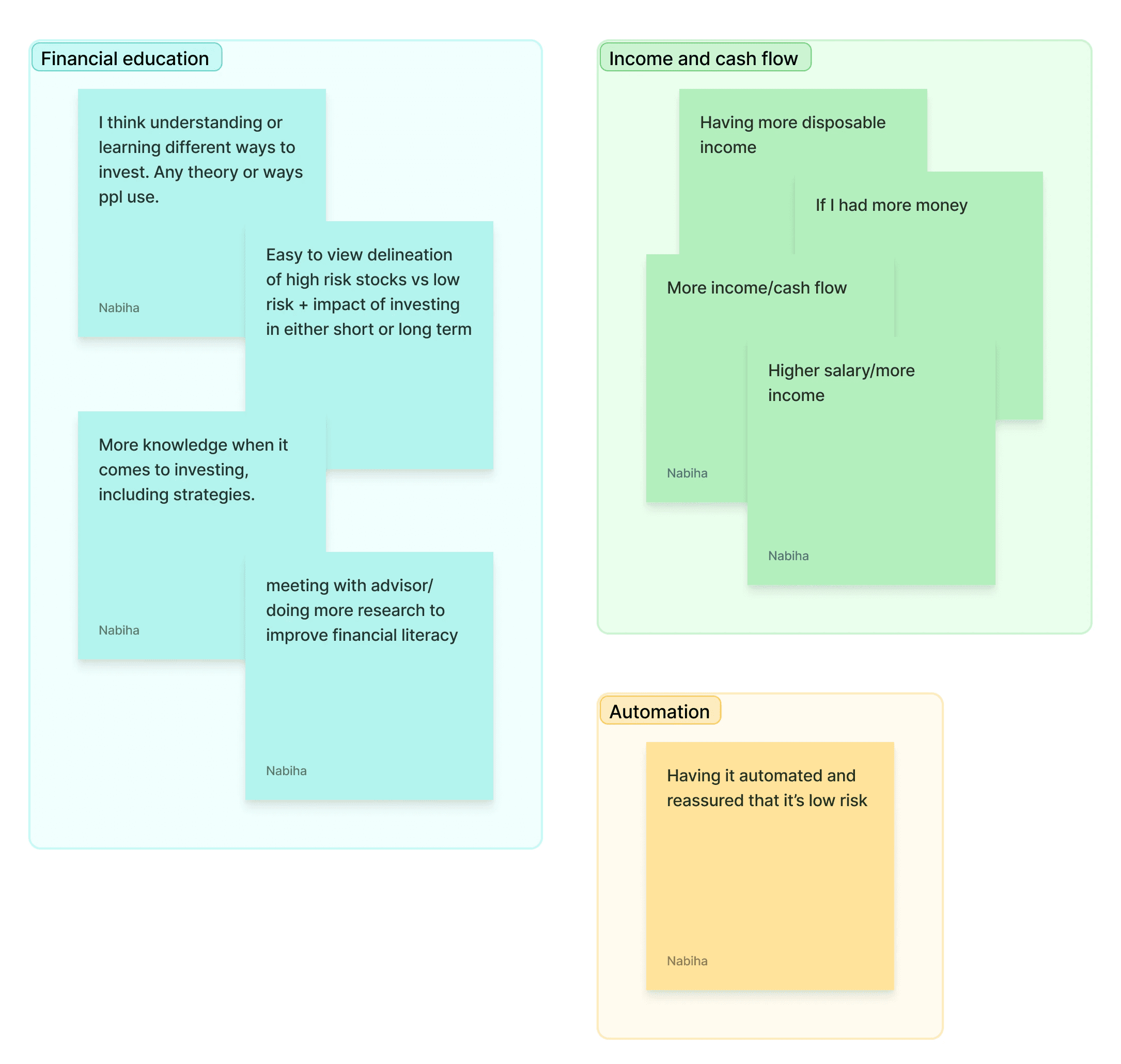
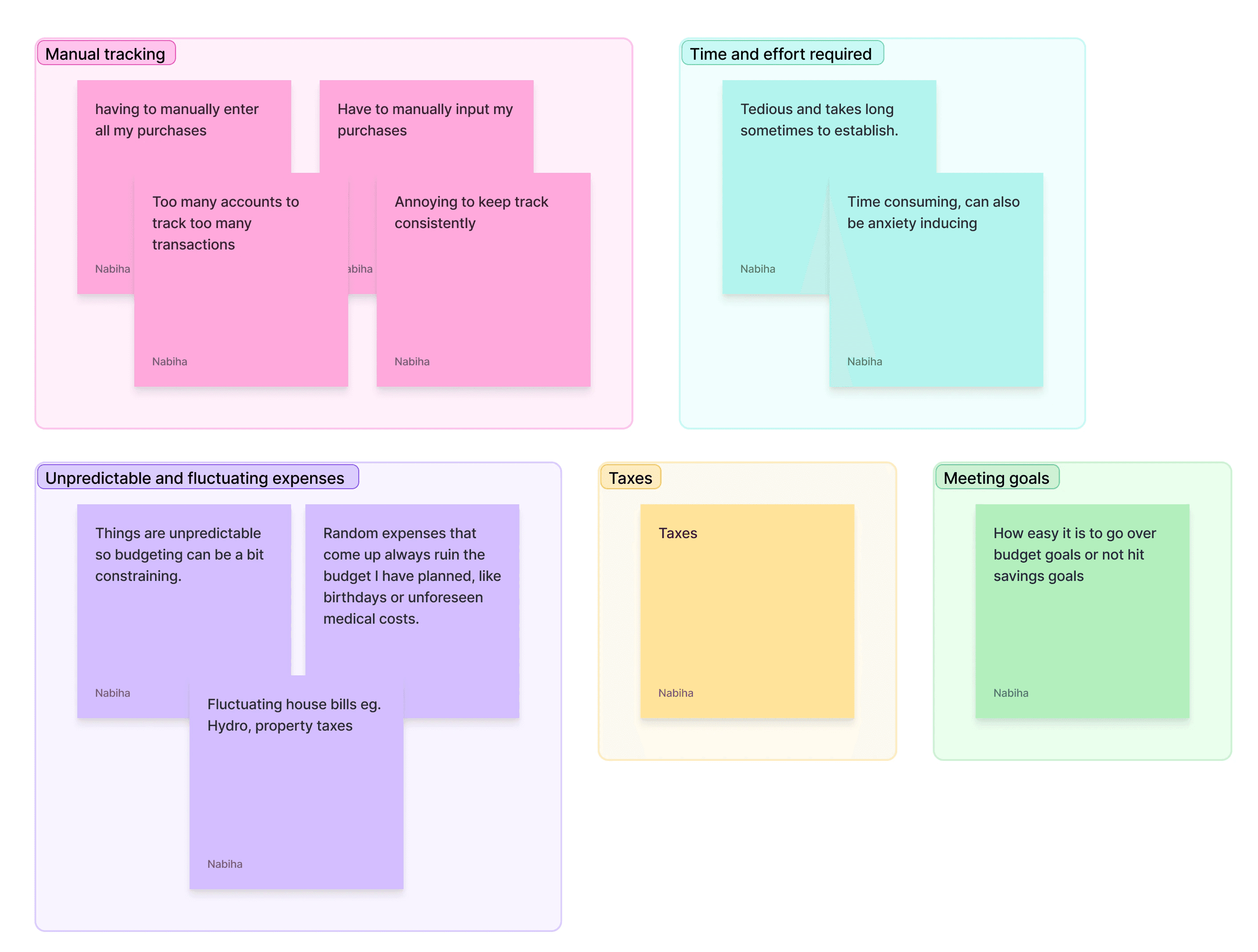
I surveyed and interviewed twelve participants aged 24–34 to understand their investing, saving, and budgeting behaviours, and what frustrations they have across these categories.
KEY insights
Based on my responses, I realized most young adults are actively investing, but their biggest barriers are 1. lack of income and 2. lack of guidance.
This shifted my focus from encouraging more investing to helping users make the most of the money they already have left over.
Users lack confidence and knowledge on investing.
Guidance on where to invest
Users need personalized guidance on where to direct their money for maximum growth and goal completion.
Users have leftover money after expenses, but don't keep track of where it goes.
Help maximize leftover income
Users need visibility into their surplus income so they can save it, rather than losing it to untracked spending.
Users find manual tracking tedious and too constraining.
Automated, flexible budgeting
Users need a flexible budgeting system that tracks and categorizes expenses automatically.
Users report that irregular expenses are a big barrier to saving consistently.
Track and predict irregular expenses
Users need a way to account for irregular and non-monthly expenses in their budget.
competitor analysis
I analyzed three budgeting apps to understand how they handle tracking expenses and setting spending limits by category.
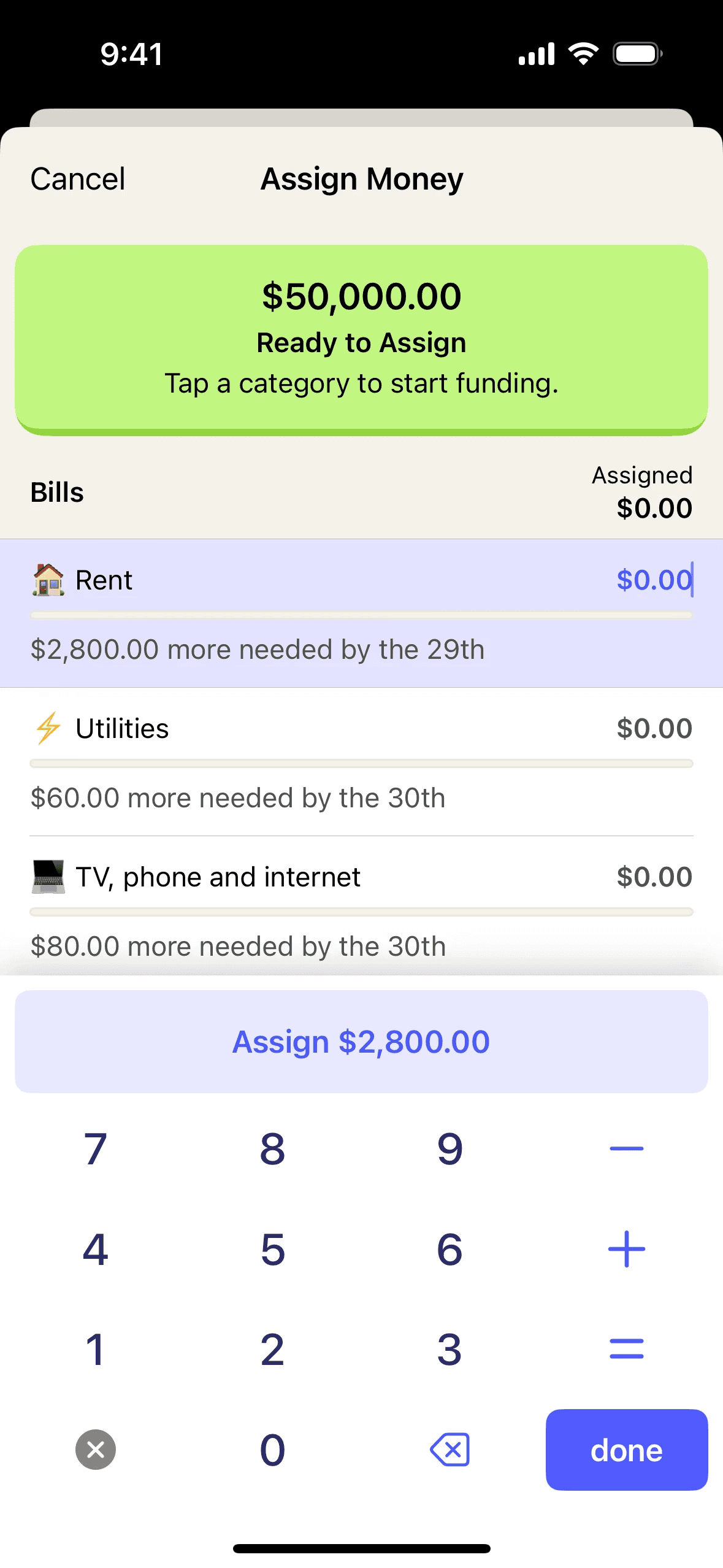
YNAB (You Need a Budget)
Zero-based budgeting app that encourages users to assign every earned dollar a role, whether spending or saving.
Pros
All money is accounted for (zero-based)
Cons
Manual budgeting
Steep learning curve
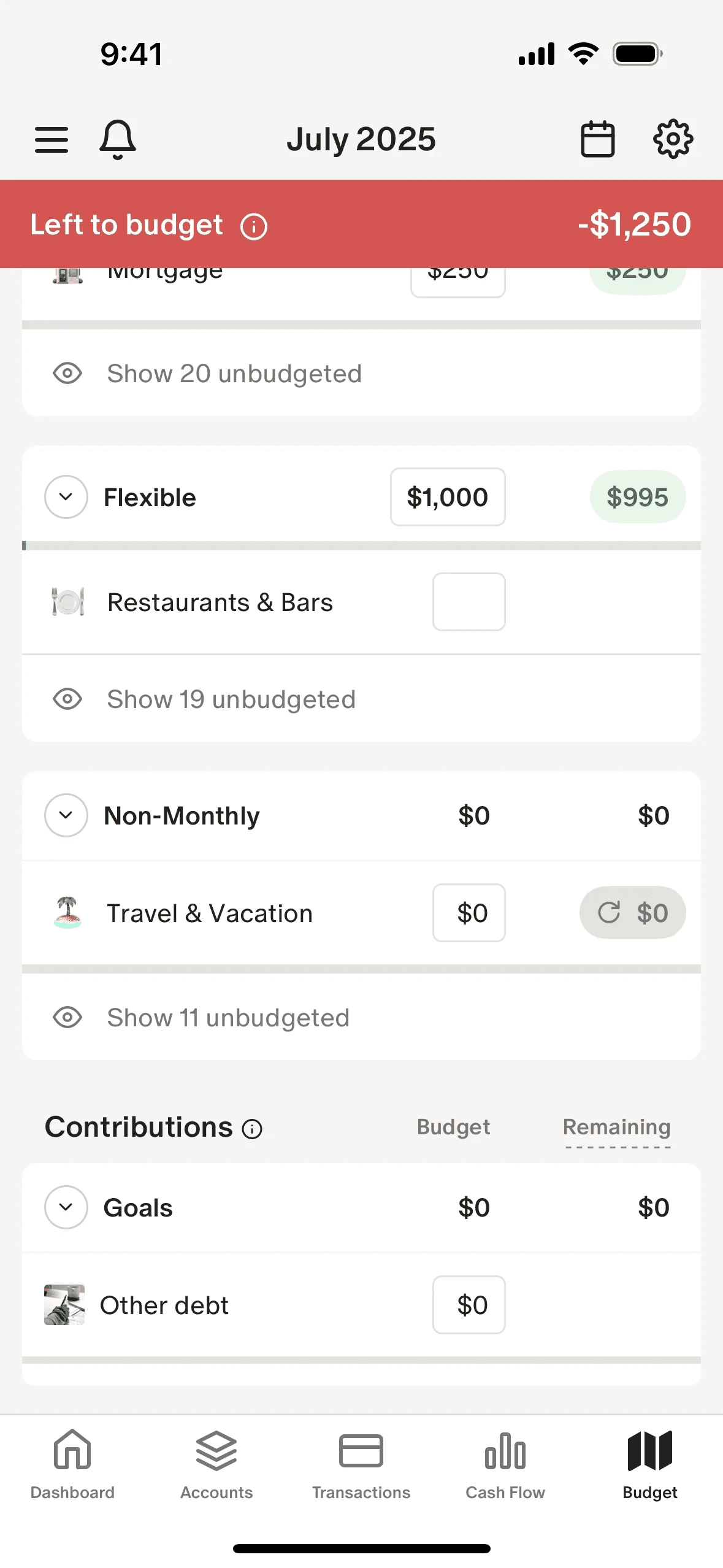
Monarch
Comprehensive financial planner that brings banking, investments, and goal-setting into one place.
Pros
Clean, intuitive interface
Collaborative (couples/families)
Cons
"Flexible" budgeting still requires setting manual limits
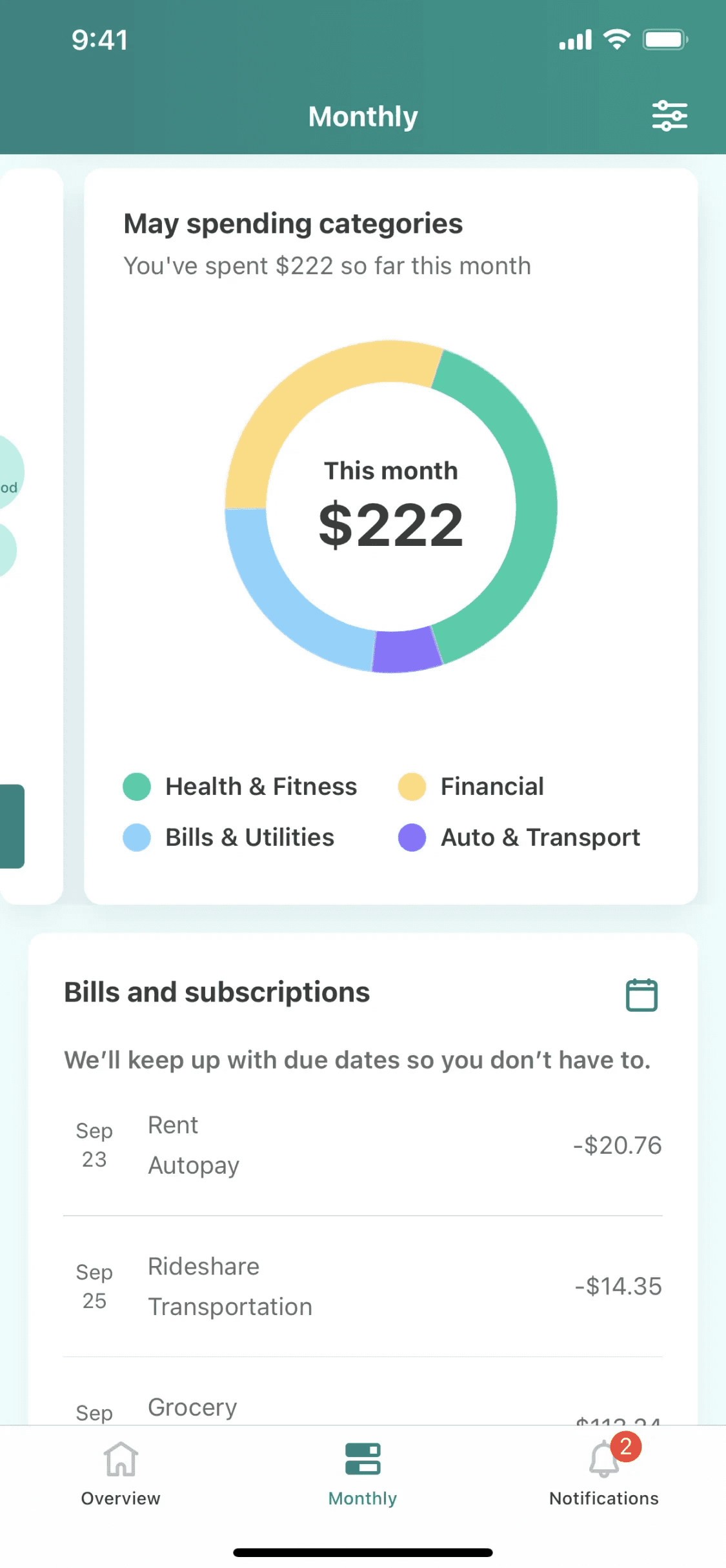
Mint
Personal finance app that automatically tracks and categorizes transactions for insights on user spending habits.
Pros
Fully automated
Average spending is used if limits aren't set
Simple, beginner-friendly
Cons
Defunct and its replacement is missing many features
Passive; shows past spending only
design opportunity
A flexible budgeting system that automatically directs leftover money towards specific goals.
Existing budgeting apps are too rigid and don't account for irregular expenses without users having to manually adjust their budget. Additionally, none of them guide users on where to direct leftover income based on savings goals and priorities.
INFORMATION ARCHITECTURE
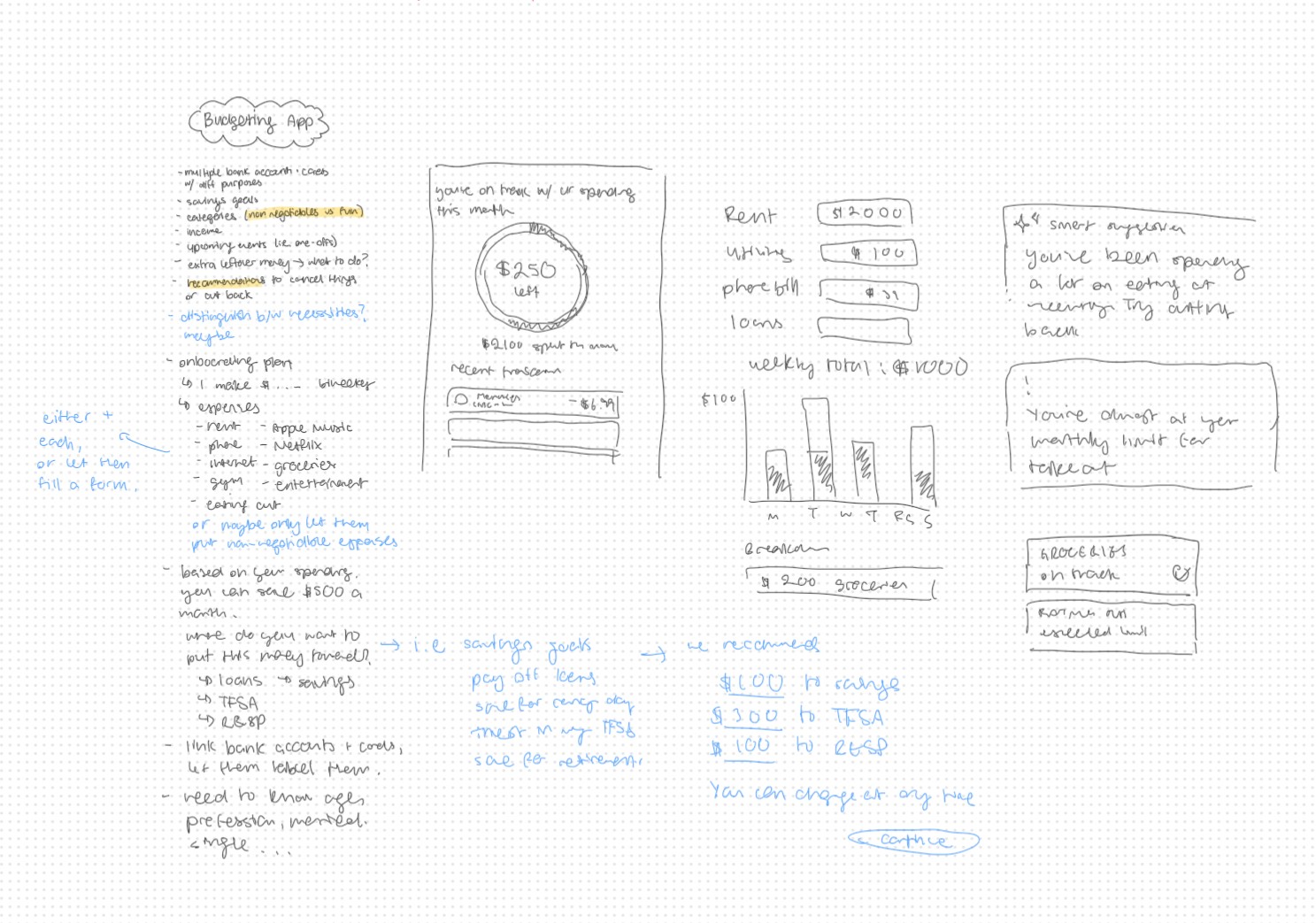
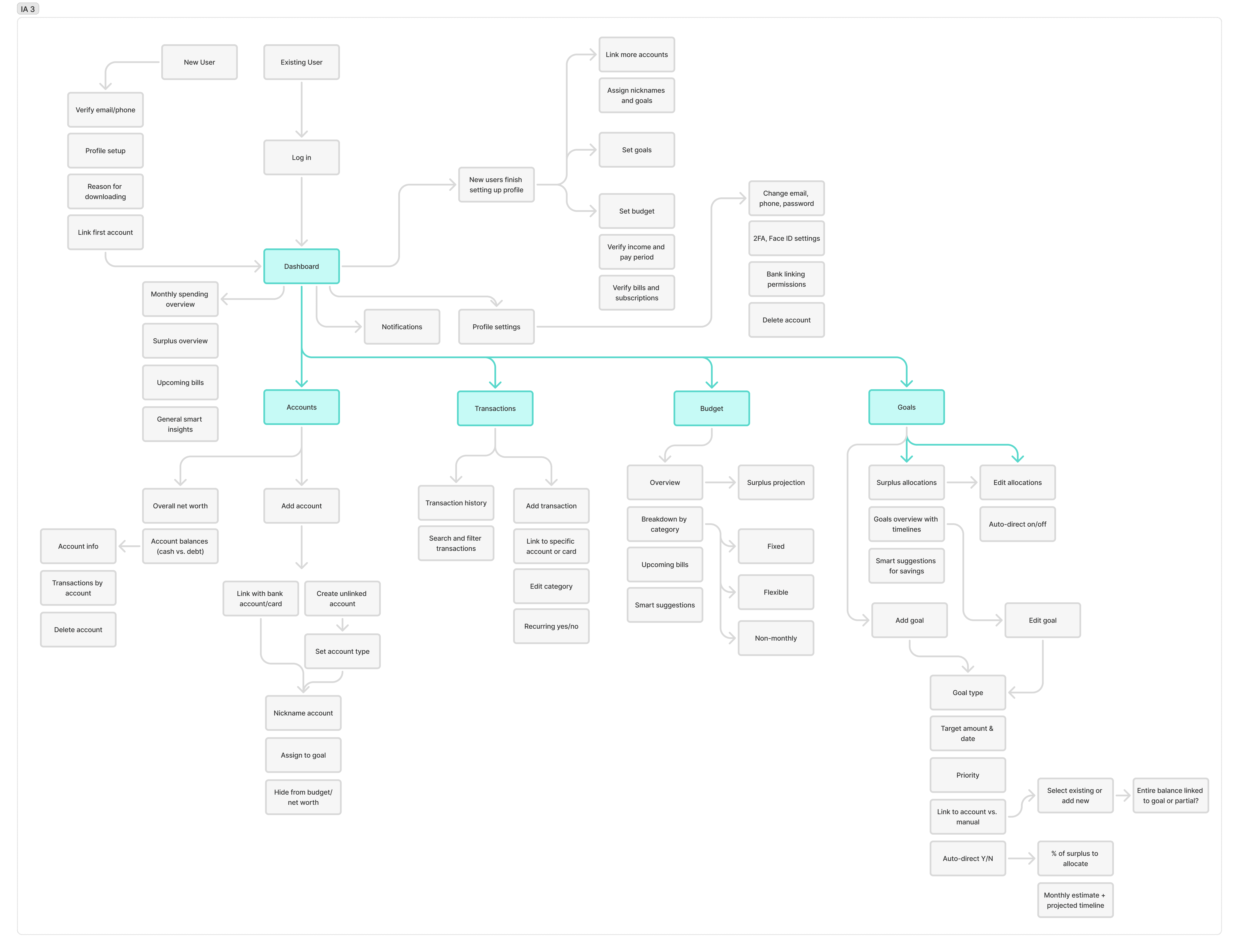
Based on my research, I brainstormed potential features which (through a few iterations) led to a structured user flow. This aided my design process as I had a strong understanding of key information to include on each screens.
design process
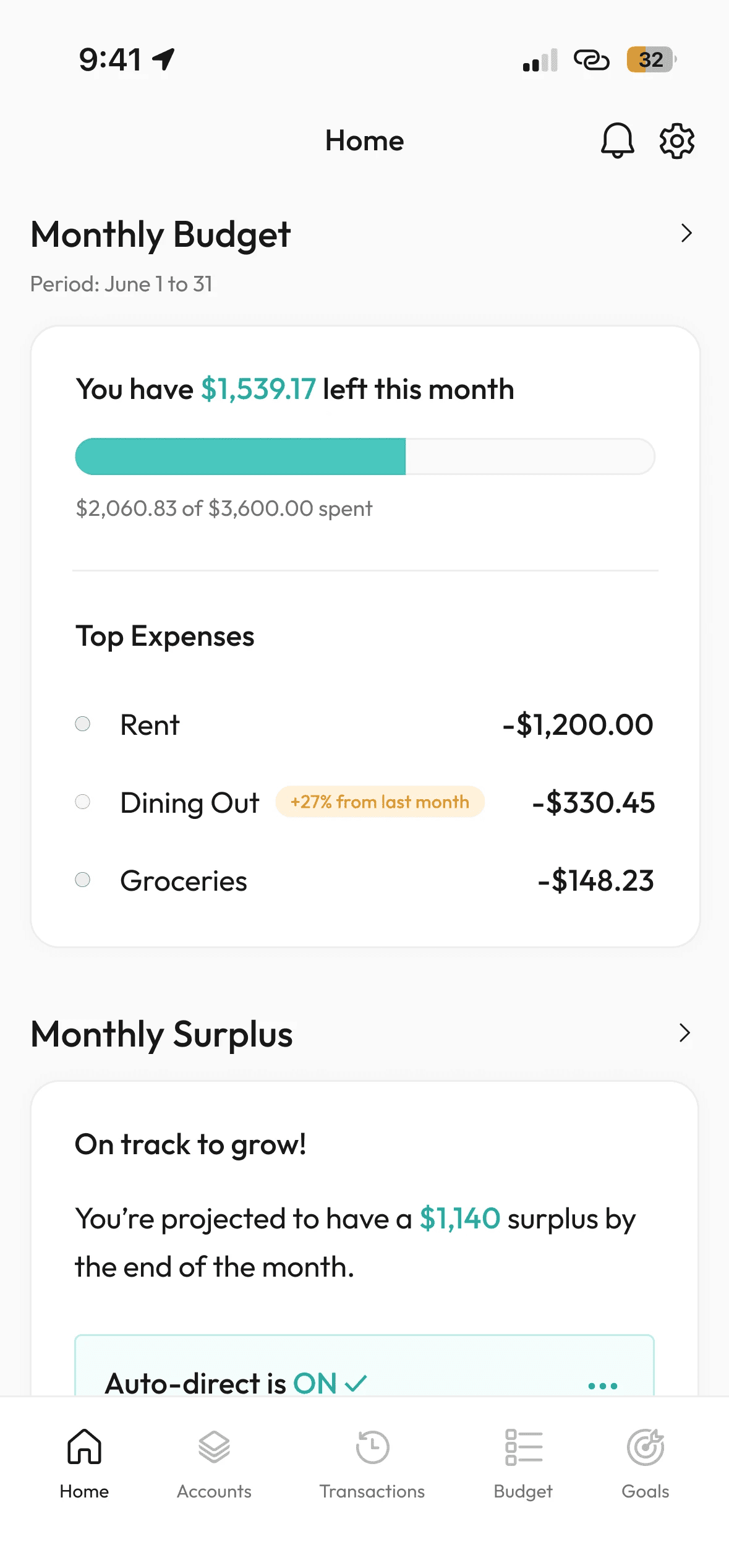
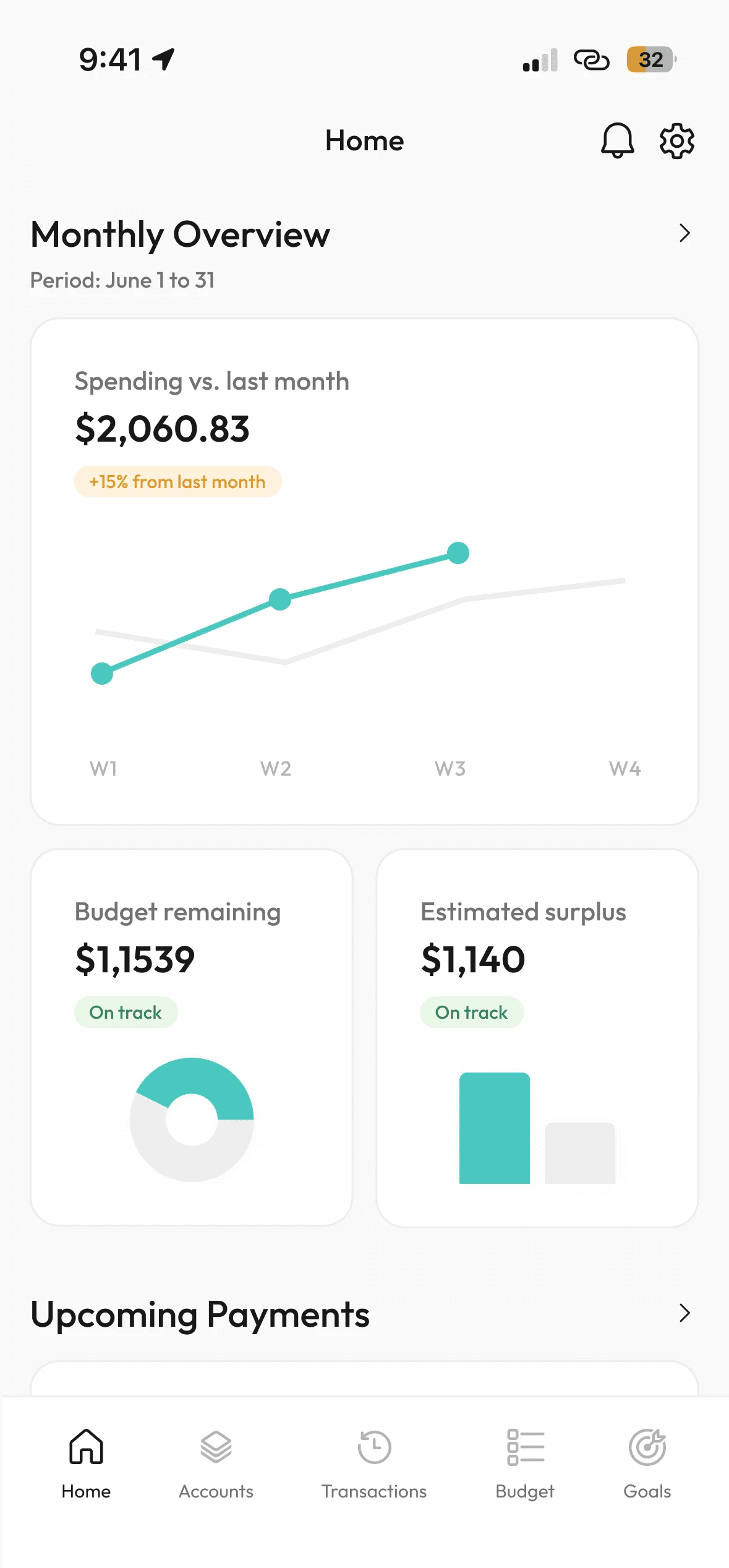
When designing, my biggest challenge was striking the right balance between conveying enough information without overwhelming the user. I achieved this by incorporating visuals wherever possible and ensuring there was sufficient white space throughout the interface.
Moreover, I tried to remove any redundant information where I could, whether it was a repeated widget or two nearby buttons with the same function. Below is an example of my design iterations for the home screen.


final design
The final product, Surplus, is an automated zero-based budgeting app that analyzes user spending habits and directs surplus money to savings and investment goals.
Below is a detailed breakdown of key features across the five main screens.


Monthly spending overview
See if you're on track with your finances at a glance.

Goals snapshot
Quick overview of progress with estimated completion dates.

Smart insights
Forecasts changes in spending habits based on your calendar.

Upcoming payments
A reminder of any auto-payments coming up.
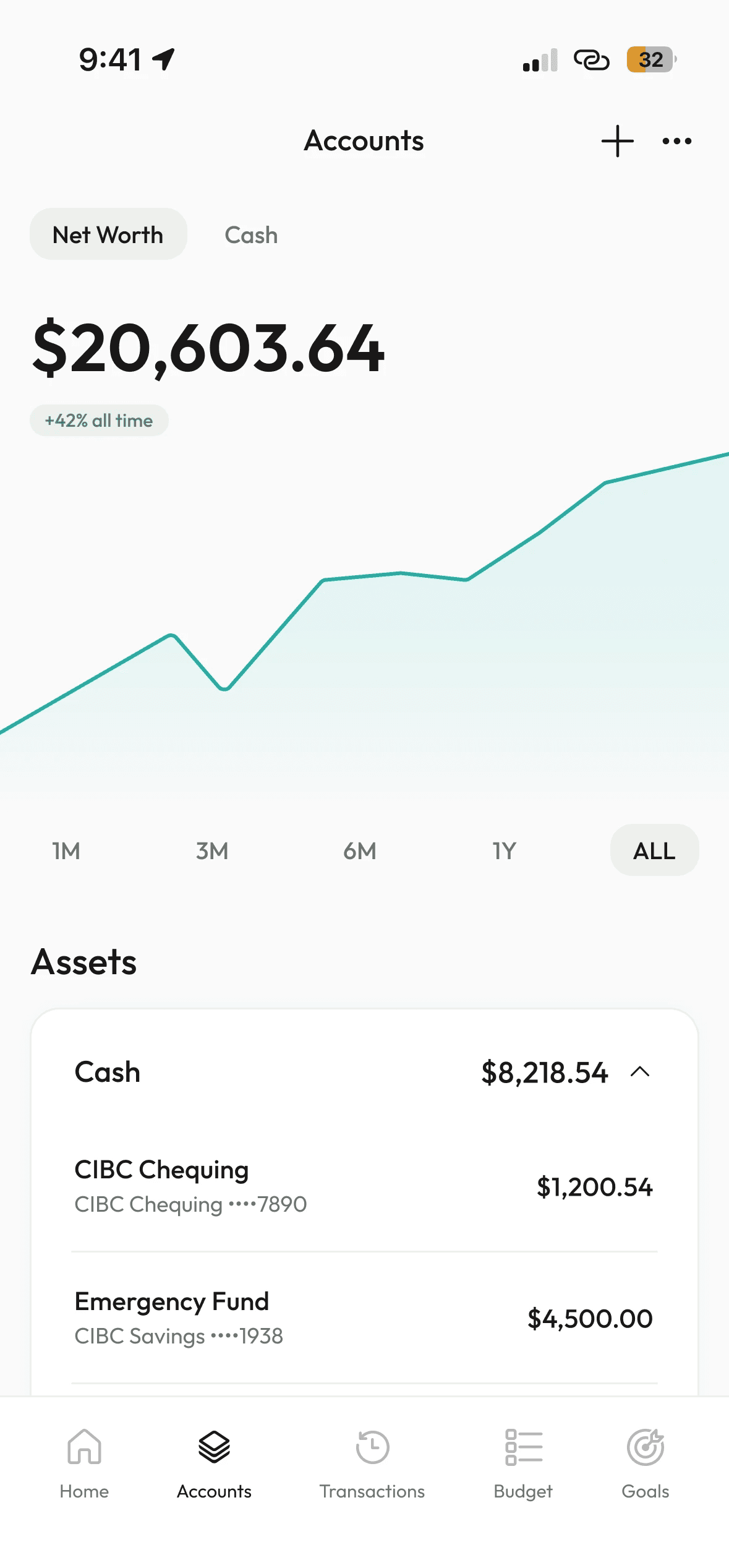

Detailed account information
Assign nicknames and account types (cash, investments, credit cards, loans) for an accurate total net worth.

Recent transaction history
Auto-direct payments from Surplus as well as recurring payments are denoted.
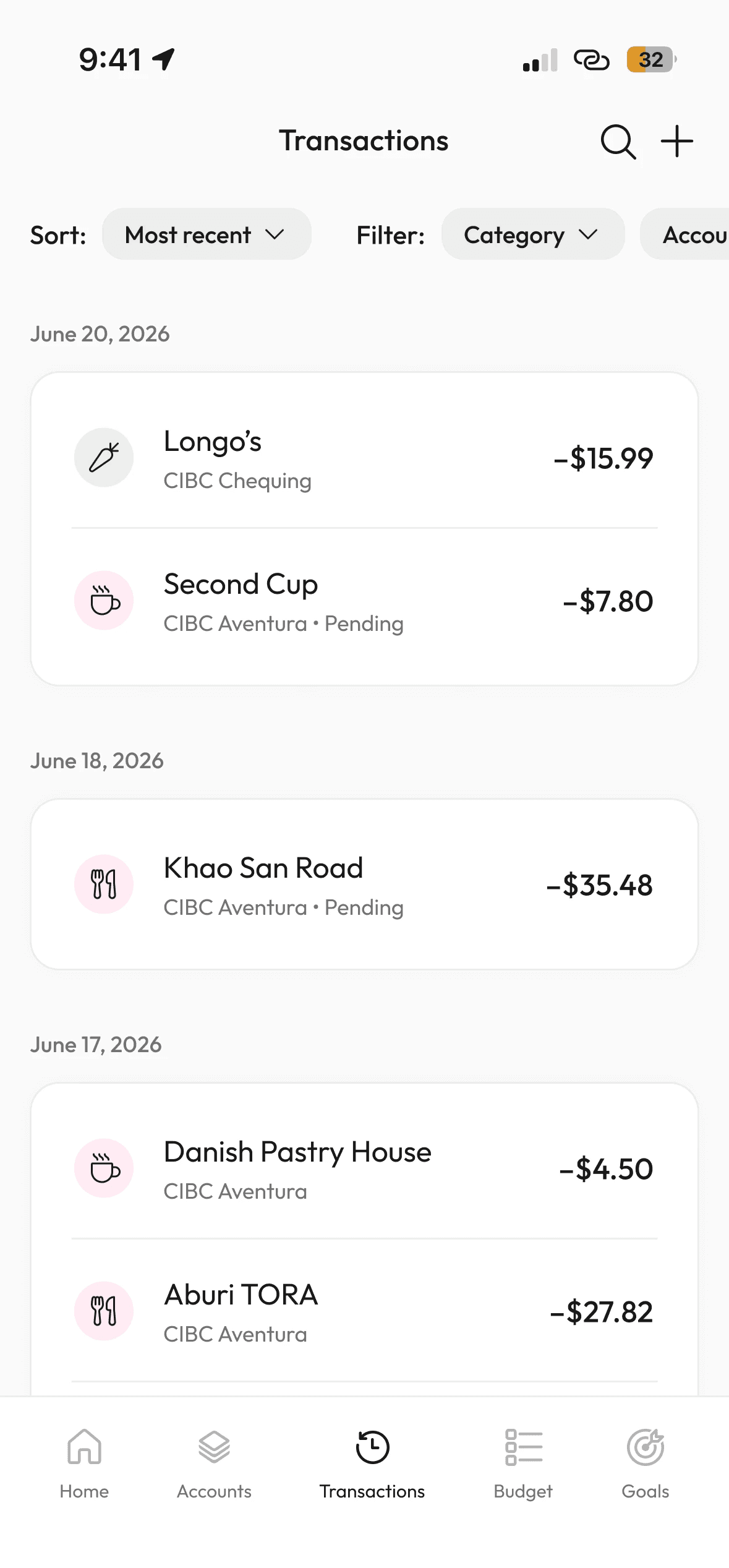

Detailed transaction breakdowns
Edit transaction categories and designate recurring payments.

Monthly budget impact
See each transaction's impact on its corresponding category.


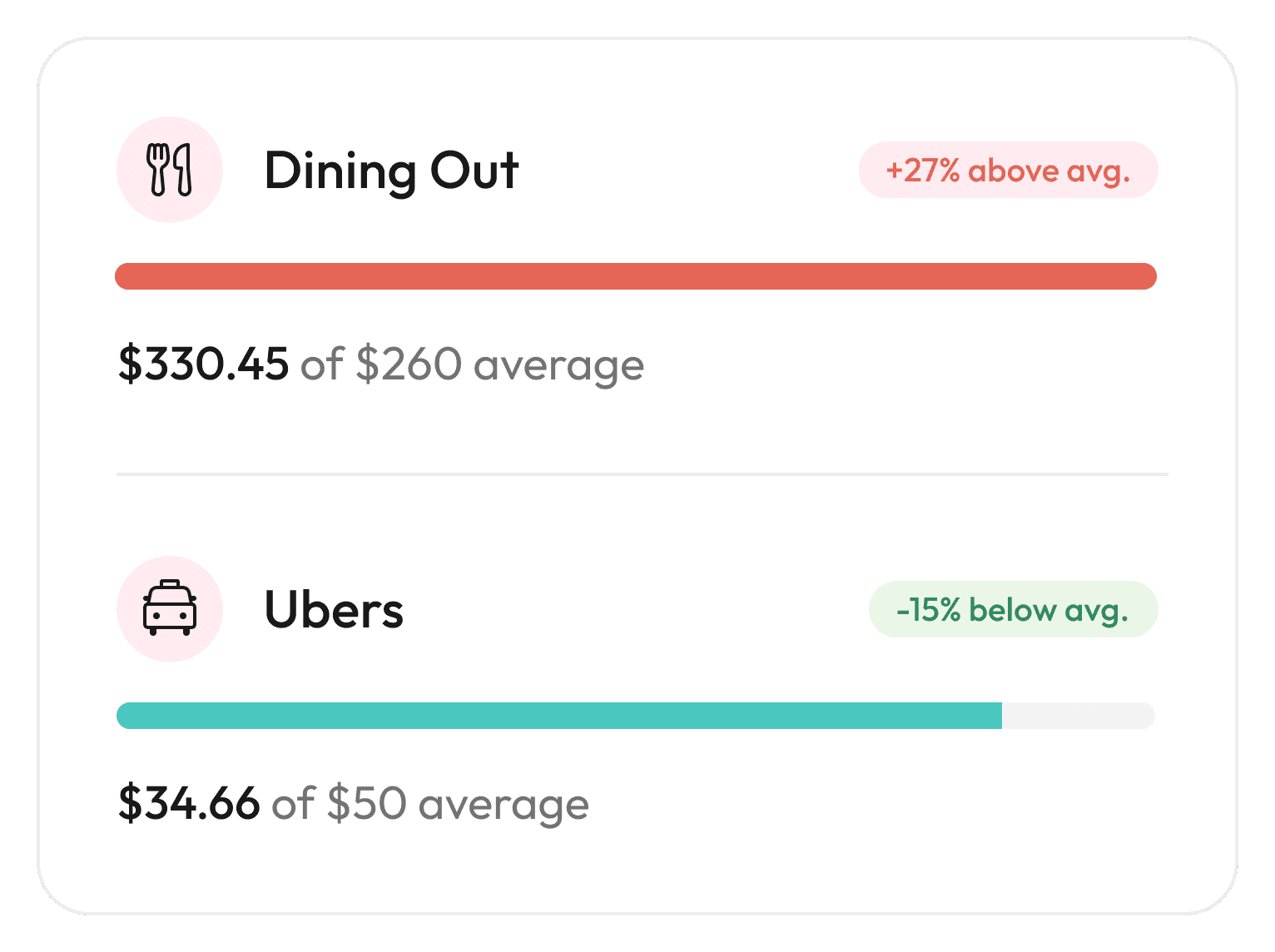
Detailed spending breakdown
See if you're on track with spending across fixed, flexible, and non-monthly categories.
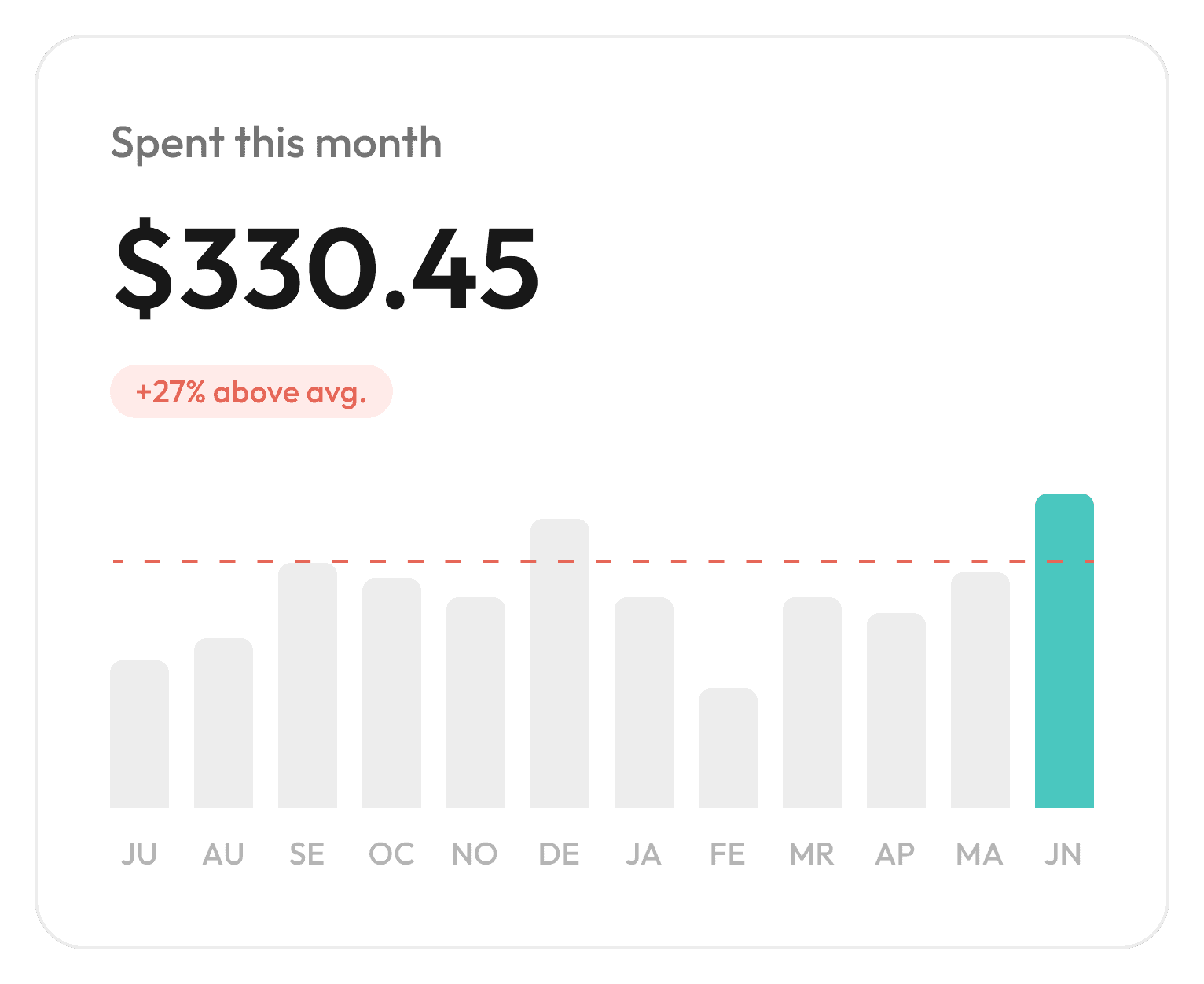
Monthly categroy averages
Spending habits are analyzed to predict surplus projections.

Zero-based budgeting
Any income left after fixed, flexible, and non-monthly expenses gets accounted as surplus.
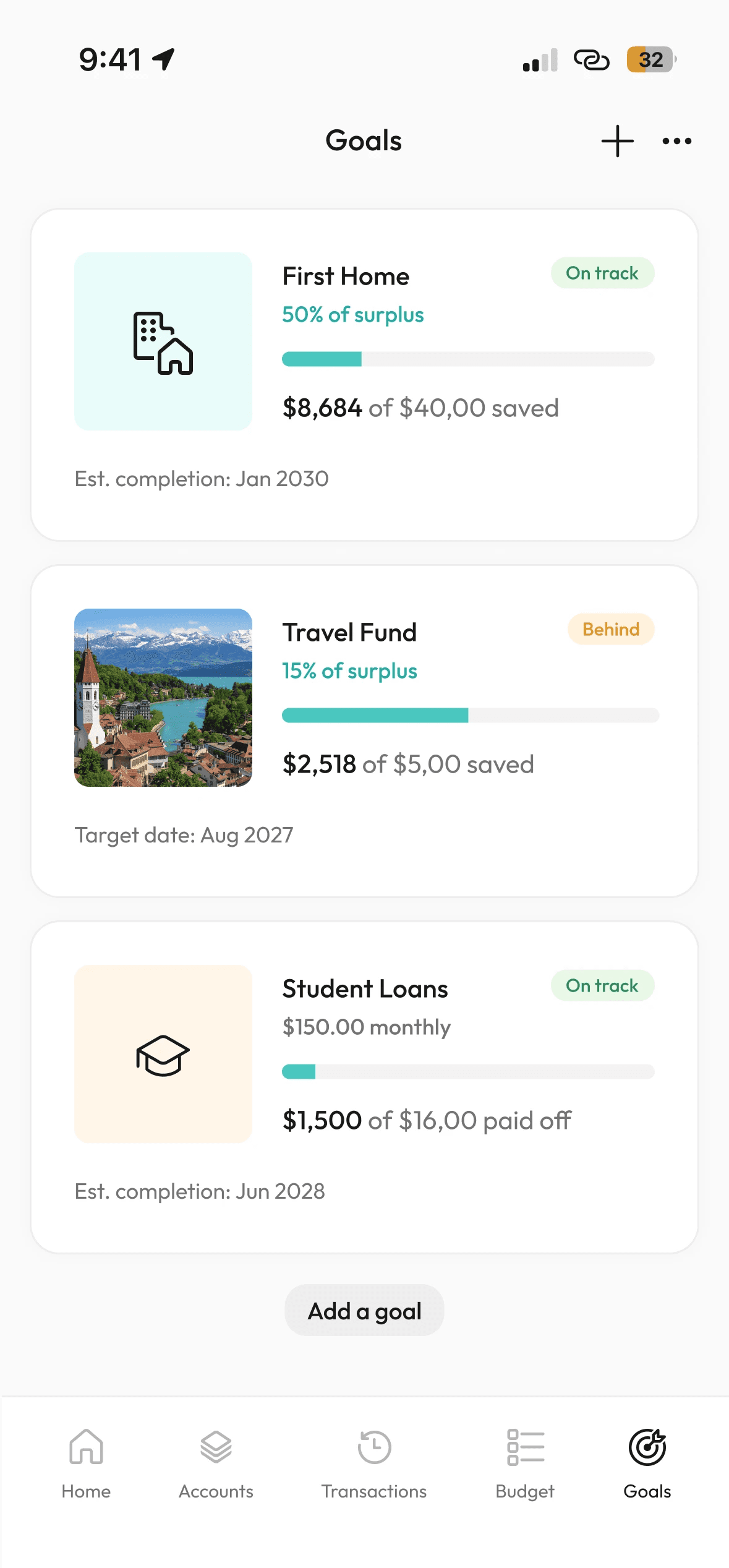

Custom goal-setting
Set targets for goals and how much of your monthly surplus you want to contribute to them.

Allocate your surplus
Choose how leftover money will be directed to your goals based on priority and timing.
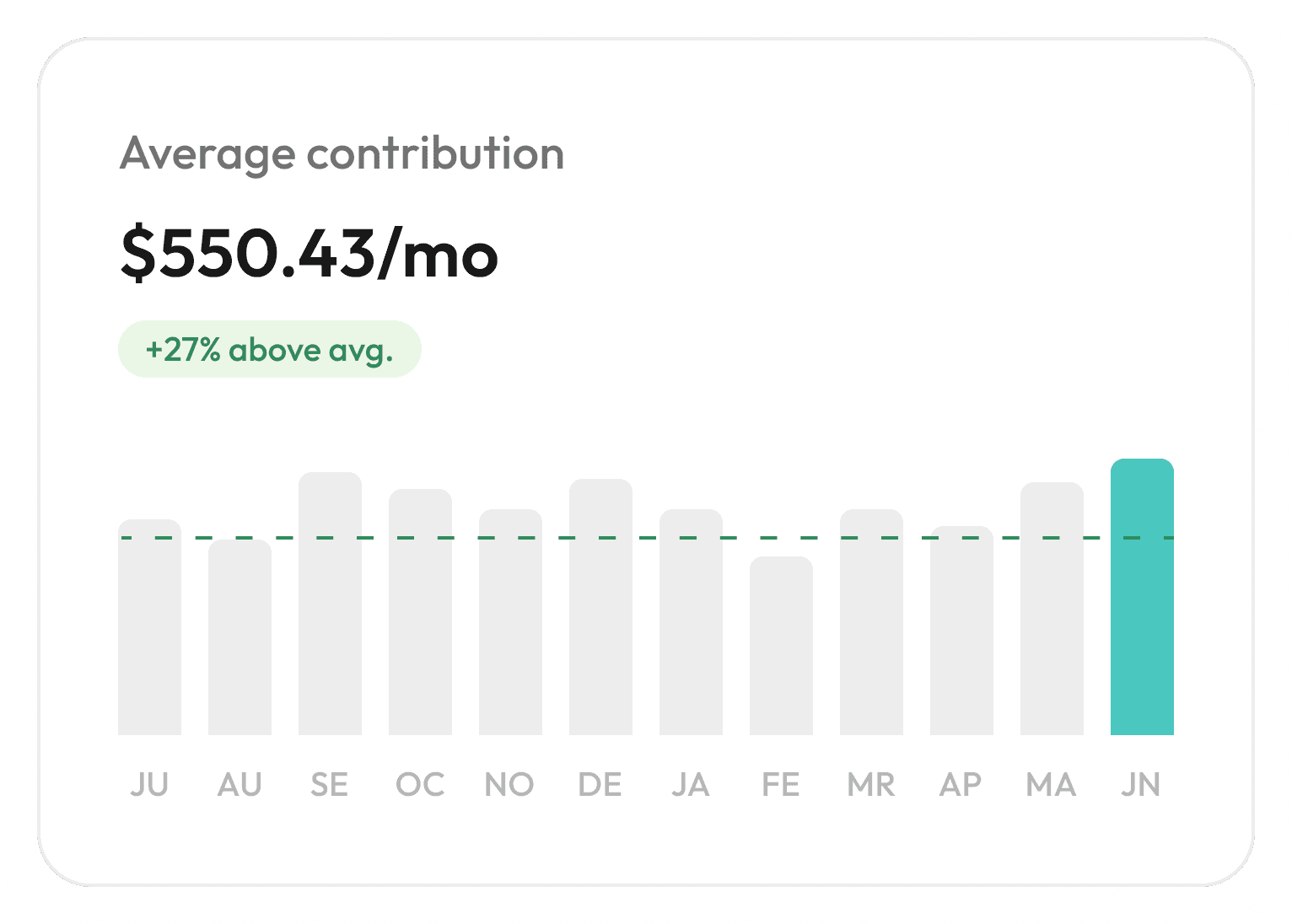
Monthly average contributions
See if you're on track with budget goals based on average contributions towards your goals.
key Takeaways
As my first self-directed project (i.e. outside of school or work), Surplus strengthened my time management abilities by forcing me to take full ownership and set deadlines for myself at every stage.
Designing a product for a saturated market was daunting but through the research process, I was able to uncover a gap in the market and ultimately build a solution with a clear UVP.